THE PLANET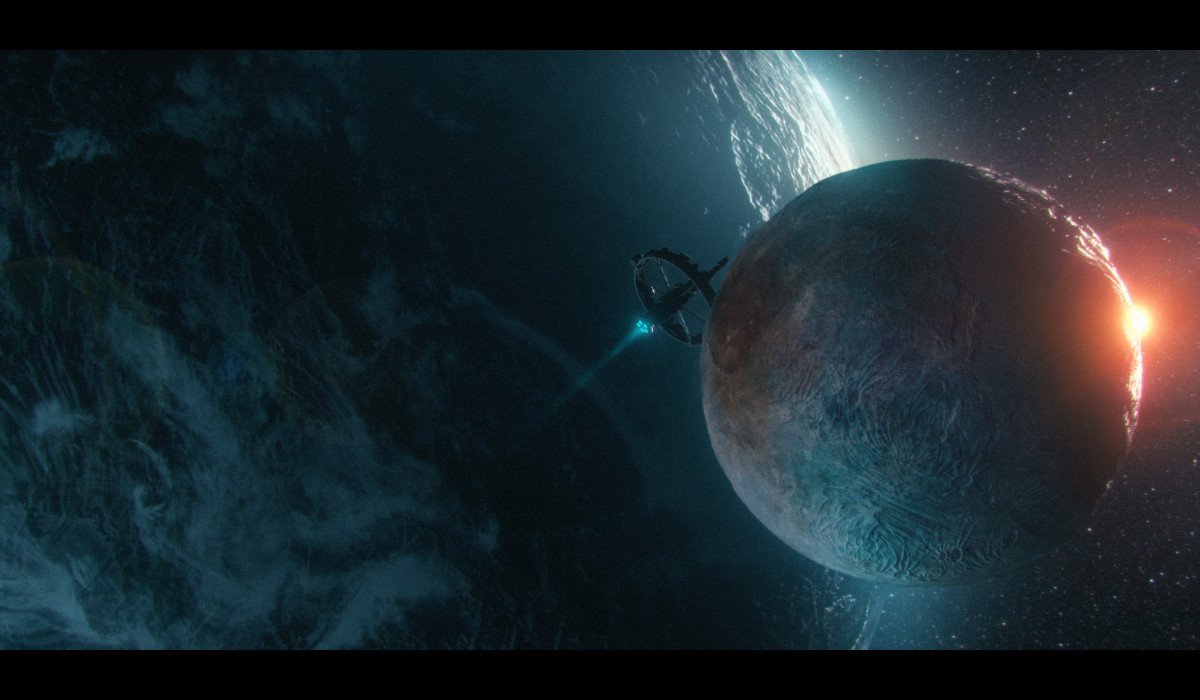
©
There is a breathable atmosphere and gravity is similar to that of Earth, though not quite as strong (~80% of it). There is no indication that this space is immediately deadly to humans. There is also no indication that this planet has ever been inhabited by a human(oid) species or another species that made any attempt at building a civilisation or changing the landscape in any way.
The planet features four major landmasses: two of these (situated near the poles) are plain white from the distance. These will feature in our description as "ice caps". One appears green-purple from the distance and will feature in our description as "GP". GP is situated near the Northern ice cap. One appears yellow-grey from the distance and will feature in our description as "YG". YG is situated near the equator, on the far side of the planet from GP. These landmasses are separated by a great deal of water, which appears blue-green from the distance.

"GP"
 ©
©

©
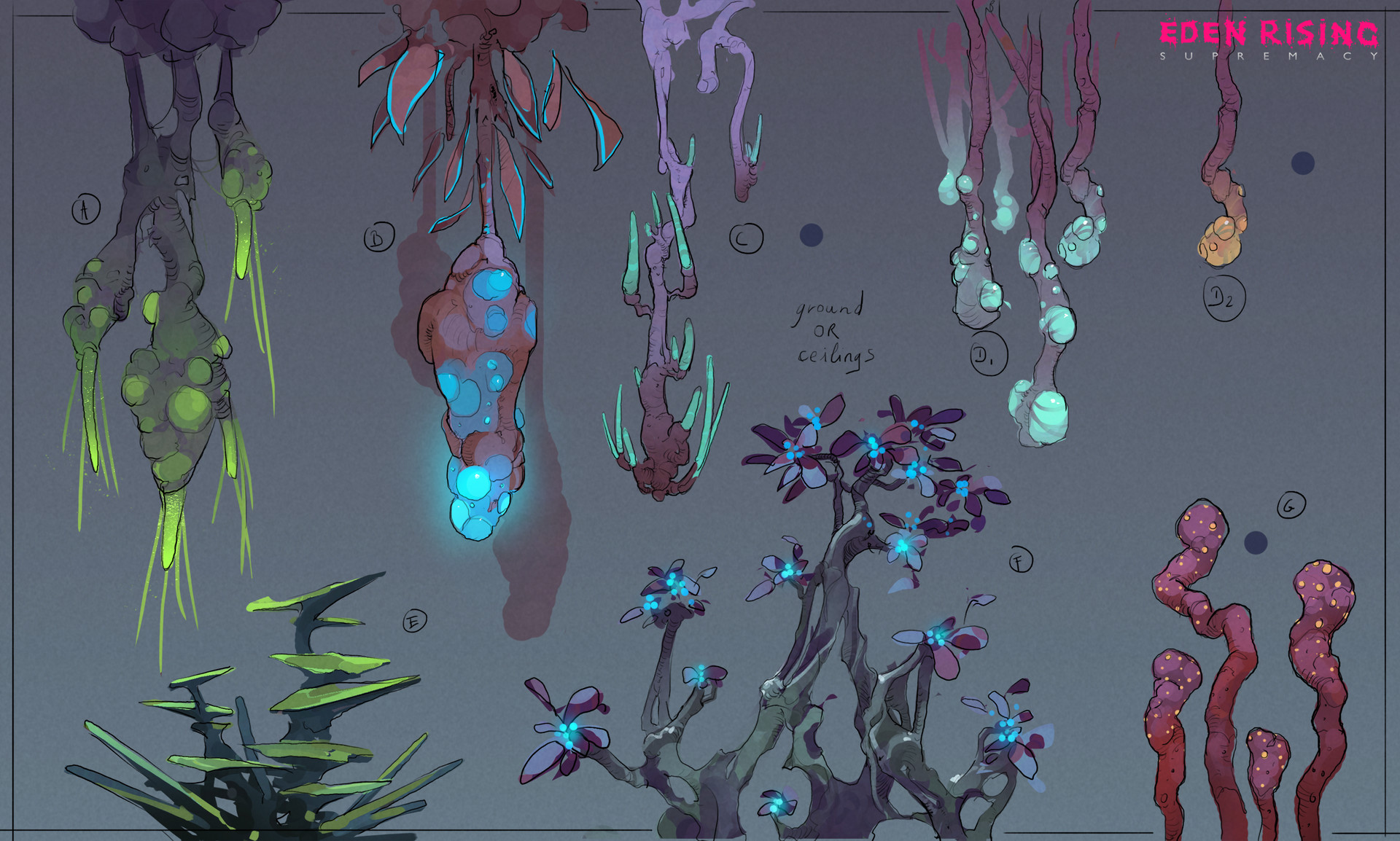
The coast of the nearest landmass is cliffy; the landmass itself largely barren stone, though there are mosses and fern-like plants in green and purple. The soil here is rich in minerals and the landmass still young, meaning there is some volcanic activity at times and a great deal of thermodynamic activity beneath the ground and the nearby sea, leading to hot spots in the water and hot springs (at times boiling!) on land. A section of cliff has been terraformed by Lapis to be inhabitable, featuring "rooms" inside the stone.
The area is relatively cold and close enough to the arctic circle to be very dark in winter (bonus: one might spot something like the Northern lights) and to have midnight sun in summer.
©
The flora in GP features mosses, fern-like plants, succulents and the like, some of it luminescent. There are smaller rodent-like animals in abundance as well as larger creatures the sizes of sheep and horses.
"YG"

©
YG is a desert: hot during the long daylight hours, but with rapidly falling temperatures during the night. There is little water and few plants - what there is in terms of fauna has adapted to life in these harsh conditions, storing water and requiring very little of it to begin with. Rarely, the desert will be hit by rainstorms. Much more frequently, it will be hit by sand storms.

©
The wildlife in YG consists mostly of insects and small rodents, but there are also fox-like creatures and larger predators.
ICE CAPS
©
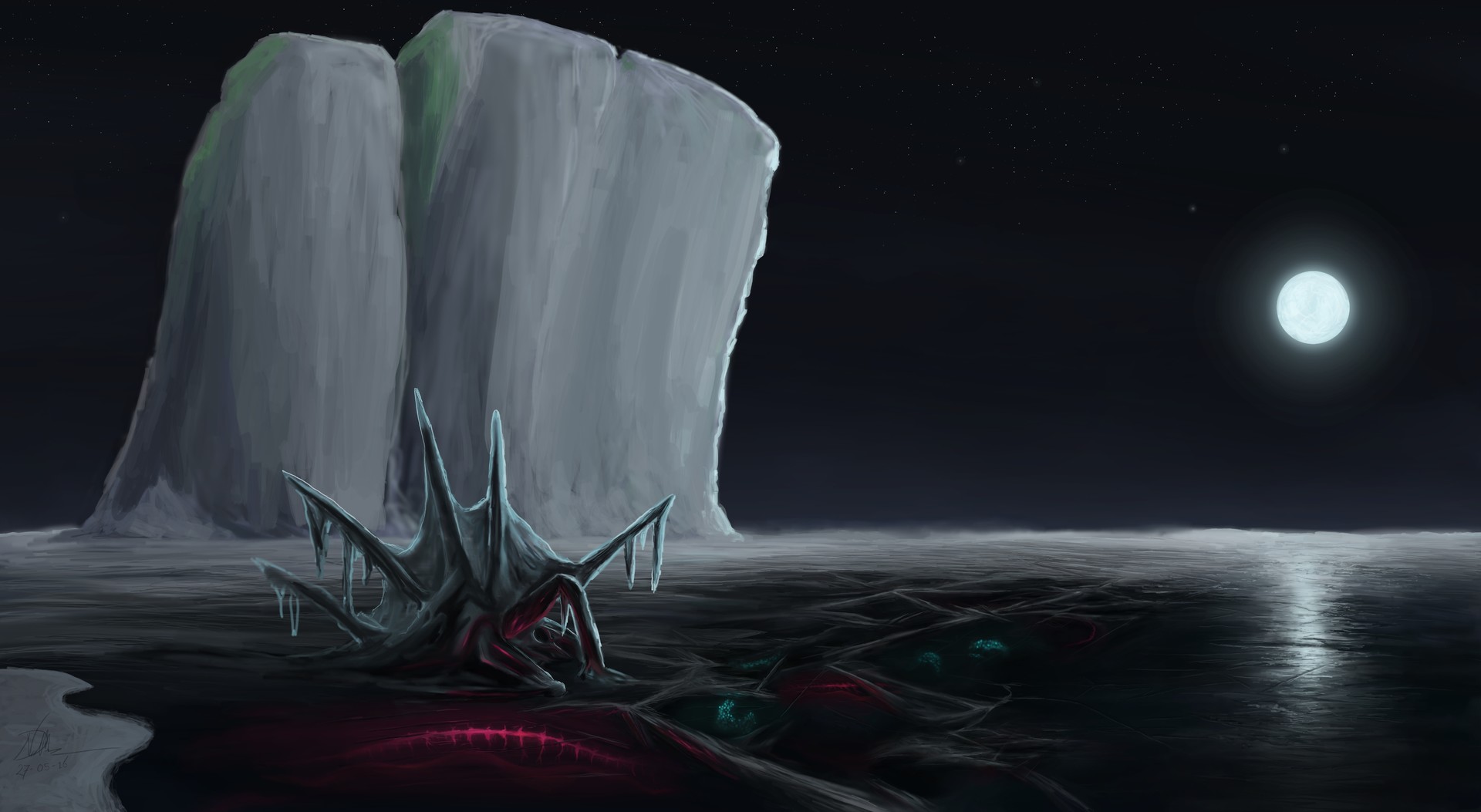
The climate in this region is cold and temperatures hardly ever raise above freezing. In terms of flora, this means there is very little above the ground. In the water, meanwhile, some algae has adapted to the cold. The region is frequently hit with storms, though it is generally dry.
There are a number of mammals, ranging from very small (mouse-sized) to large (mammoth-sized).
"WATER"
©
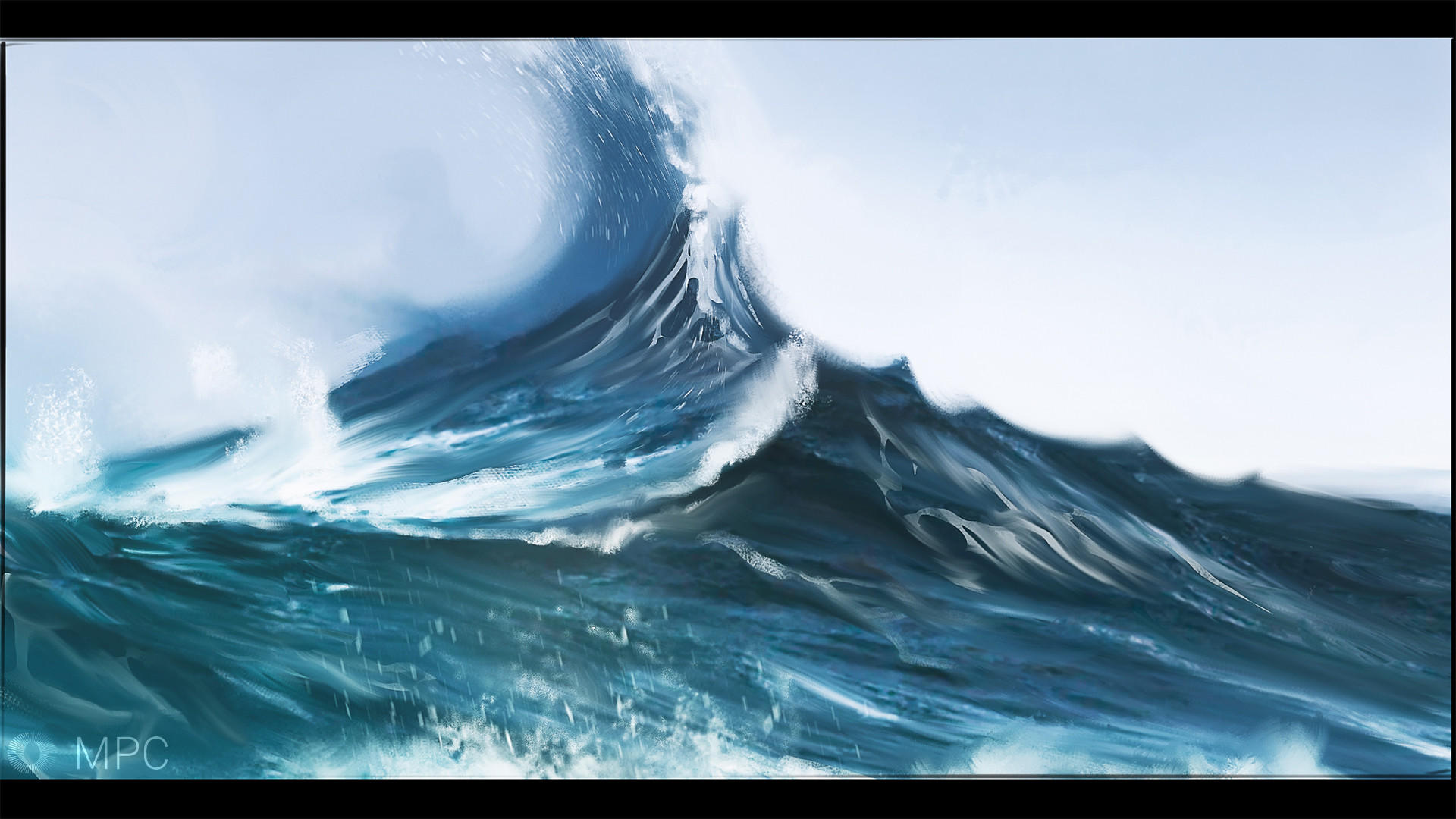
The majority of the planet is covered by water. It is salty, though less so than Earth's oceans would be, and has a far higher degree of other minerals in it. It differs per region in its temperature, flora and fauna. Both plant-life and animals are present in abundance in most regions and take a wide variety of forms.


![[personal profile]](https://www.dreamwidth.org/img/silk/identity/user.png) jettisons
jettisons